How to Clean and Care for Talavera Pottery
Start by looking at the piece. A dusty display figure, a plate made for everyday meals, and a planter that spent the summer outside each call for a different kind of care. The condition of the glaze and the maker’s instructions guide what to do next.
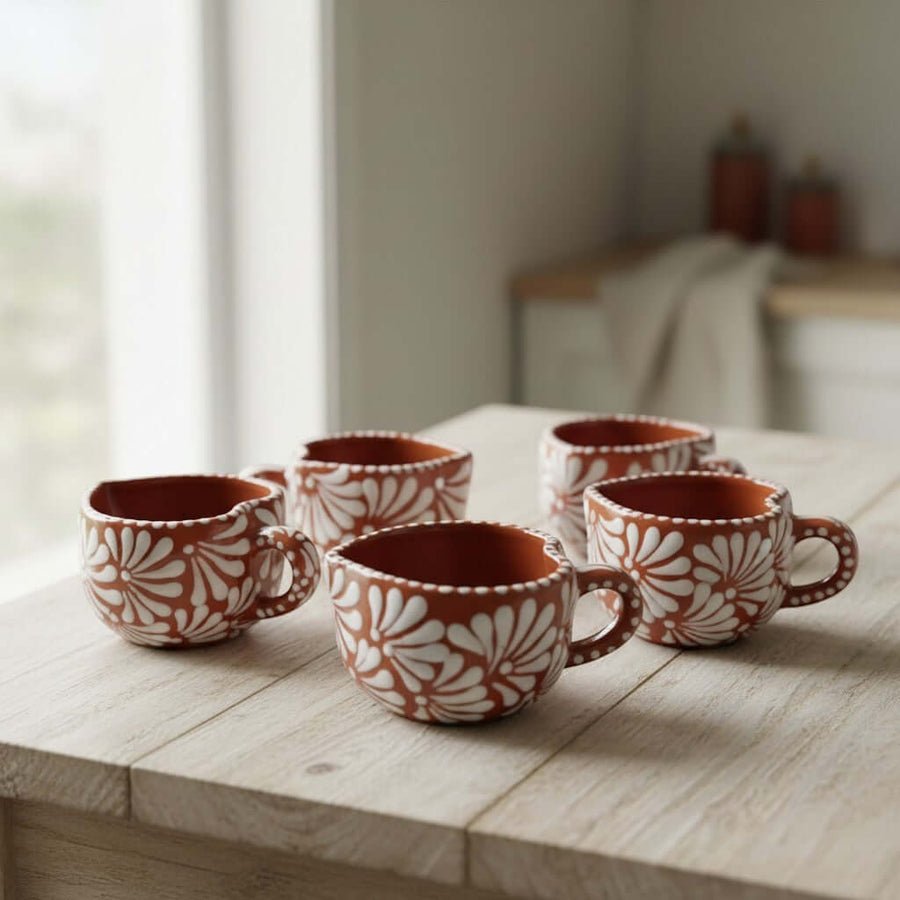
Look closely before you clean
Set the piece on a stable, padded surface in good light. Look at the rim, foot, handles, and the places where the decoration changes texture. A fine line in the glaze, a loose handle, or a visible seam from an old repair can change how you handle it. Lift with both hands, supporting the base. If the piece has a loose lid, move the lid separately.
Notice where the clay is exposed. A glazed bowl can have an unglazed foot that absorbs water. Some pieces also have applied decoration that responds differently to moisture than the glaze beneath it. The guide to making Talavera explains how potters build these surfaces in stages.
Dust and clean decorative pieces gently
For sound decorative pottery, start with a soft, dry brush or a clean, soft cloth over a smooth surface. A brush reaches the recesses around a handle or a molded detail without the pressure of rubbing. Leave any lifting paint or flaking glaze alone. Cloth fibers and brush bristles can catch fragile decoration.
On a sound modern piece whose maker allows damp cleaning, wipe intact glazed areas with a soft cloth lightly dampened with lukewarm water. Keep moisture away from unglazed clay, exposed edges, and repaired areas. Let the piece air-dry at room temperature. Reserve wet cleaning of antiques or pieces of uncertain condition for advice from a ceramics conservator. Canadian Conservation Institute guidance on caring for ceramics.
Choose a display spot that makes cleaning easier. A sheltered shelf collects less kitchen grease than a ledge near the stove. Leave enough space around the object to dust the shelf without nudging the pottery. A stable stand sized to the plate supports it without the pressure of a spring-loaded hanger.
Care for plates, bowls, and mugs
Confirm the intended use
Check the maker’s label or product instructions for the exact piece before using it to prepare, serve, or store food or drink. Keep decorative pieces, antiques, and pieces with uncertain food-use information on display. A mug shape, glossy finish, or familiar painted design tells you little about how a piece was made. Even documentation of a piece’s origin answers a different question from whether the maker intended it for food.
The U.S. Food and Drug Administration explains that lead in the glaze or decoration of some traditional pottery can migrate into food or drink. The agency has also documented extractable lead in some pottery labeled lead-free. Washing or boiling the piece cannot remove lead from the pottery. If you have only a vague description or a secondhand label, reserve the piece for display while you seek reliable information. FDA questions and answers on lead-glazed traditional pottery.
Hand-washing and appliances
When the maker permits routine hand-washing, use lukewarm water, a small amount of mild dish soap, and a soft cloth or sponge. Handle one piece at a time so rims and handles stay clear of the sink and other dishes. Rinse promptly and let it air-dry on a stable rack or towel. Avoid soaking, scouring powders, steel wool, and abrasive cleaning pads.
Check dishwasher and microwave instructions separately. Even an item sold for food use needs explicit guidance for those appliances. In the absence of appliance instructions, follow the maker’s hand-washing directions and heat food in a vessel identified as microwave-safe. Let a warm piece cool gradually before washing it and keep cold pottery away from abrupt heat.
Protect planters from standing water and frost
Keep the drainage opening clear, and empty any saucer that collects water. For a decorative planter without a drain, a removable nursery pot makes watering easier. Lift the nursery pot out, water the plant, and let it finish draining before returning it to the ceramic planter.
Watch the forecast as the weather cools. Water in porous clay expands when it freezes, and repeated freezing and thawing can widen existing cracks. Even on a glossy pot, an unglazed base or chipped rim can expose the clay. For pottery without a maker’s freeze rating, move the planter to a dry, frost-free spot before freezing weather. For an empty seasonal planter, brush out the dry soil before storing it. Illinois Extension guidance on container materials.
Check the weight before lifting a large pot. Wet soil adds weight, and lifting by a decorative rim concentrates the load on a small area. Removing an inner pot first makes both parts easier to carry. Support the ceramic from underneath and set it down on a level surface where it can drain.
Handle damage and store pieces carefully
A network of fine lines on the glaze is called crazing. The Mexican Talavera standard describes it as a characteristic of the finished glaze. A deeper crack through the clay, a chip that exposes the body, and a loose handle all deserve extra care. Set damaged tableware aside from food use and avoid adding water to a piece with structural damage, flaking glaze, or an old repair. Ask a conservator about a piece you want to preserve, especially if its decoration is lifting or it has sentimental value. Canadian Conservation Institute guidance on ceramic condition and damage.
Put pieces away once their bases and interiors are dry. Choose a shelf where you can reach each piece without shifting several others. Keep fragile or repaired pieces separate, and use soft, smooth separators if sound plates need to be stacked. Common mistakes include storing a damp planter in a closed container, scrubbing at a stubborn mark, and using heat to hurry drying. When a mark resists gentle cleaning, stop and find out what the surface can tolerate before trying a stronger method.